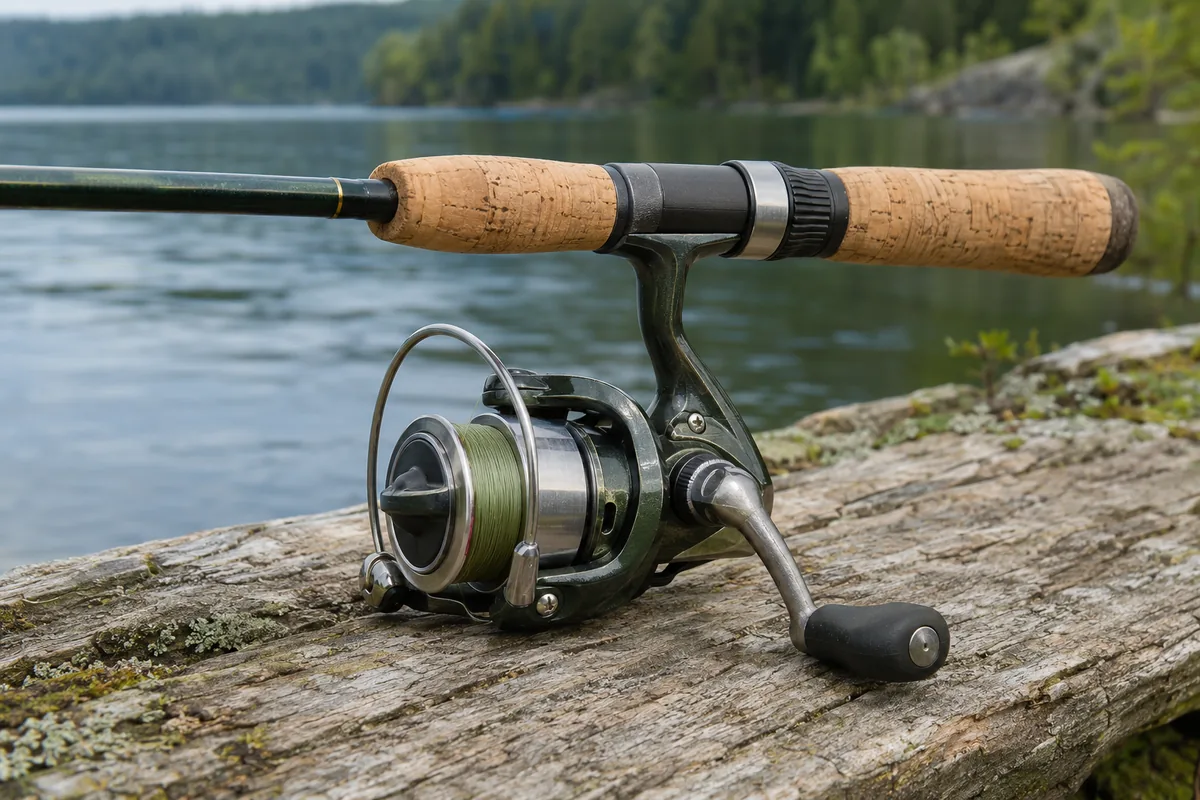
A loop jumping off a spinning spool is frustrating, but “line twist” is not a complete diagnosis. A loose loop, an overfilled spool, line that has taken a strong coil shape, and a mechanical problem can produce related symptoms. Start with what you can see instead of replacing several components at once.
This guide covers ordinary external checks. It does not require opening the reel or testing it under heavy load.
Stop before the next cast
If a loose loop is visible, stop winding and secure the hook or lure. Do not cast harder in the hope that it will pull itself clear. New York DEC’s beginner guidance warns that casting with a loop can create a worse tangle.
Find a clear, safe place to manage the line. Keep it out of walkways and away from children, pets, and wildlife. Never wrap line around your fingers to pull a knot tight or free a snag.
Identify the immediate problem
| What you see | What to investigate |
|---|---|
| One loose loop trapped on the spool | Slack wound onto the reel |
| Coils springing off repeatedly | Fill level, line handling, diameter, and condition |
| Line twisted after repeated retrieves | Spooling, presentation, and line-roller operation |
| Line stacking heavily at one end | Model-specific spool setup or a service issue |
| New roughness or unusual noise | Stop and consult the manufacturer |
These observations are clues, not proof of a particular defect. Photographing the problem and noting when it occurs can help a tackle shop or service provider diagnose it.
Clear a small loose-loop problem
With the lure secured, open the bail and carefully remove line until the trapped loop is free. Keep control of the loose section. Close the bail and retrieve the line neatly under appropriate light tension, following the reel’s instructions.
If the line is badly knotted, kinked, or damaged, cut out the affected section safely and contain every offcut. Do not force a damaged knot through the guides or leave a bundle of discarded line beside the water.
Before casting again, confirm the line runs through the guides and line roller correctly. Make a short test cast in a safe area. Repeated problems warrant a fuller check rather than repeating the same correction indefinitely.
Check the spool setup
Read the exact reel manual for line type, capacity, fill level, and loading method. Generic advice about which side of a supply spool should face you does not apply equally to every reel and spooling arrangement.
Check whether the chosen line’s diameter and handling suit the outfit. Stiff or oversized line can be awkward on a small spool. A line’s strength label alone does not establish compatibility; the fishing-line guide explains the separate properties.
If line is stacking unevenly, do not begin adding or removing washers based on a different model’s instructions. Some reels have model-specific adjustment procedures. Use the correct manual or ask the manufacturer.
Look for a recurring cause
Notice whether trouble follows winding slack line, a particular lure, or a recent respooling. Watch that the line is seated on the roller before retrieving. Check whether the lure is fouled or behaving abnormally rather than assuming its normal action is the cause.
Shimano’s FAQ identifies incorrect spooling and a binding line-roller component among possible twist causes. That does not mean every twisted line needs oil. Use the approved maintenance instructions and seek service when operation is abnormal; indiscriminate lubrication can create another problem.
Build a prevention routine
Inspect the spool before casting, control slack, and stop when something looks wrong. Follow gear-cleaning guidance and keep the line package or a note of its specifications.
For a new outfit, confirm the rod, reel, and line match. A repeatable setup and careful observations are more useful than declaring all spinning reels or all line of one material unreliable.
Sources and further reading
- New York DEC: Intermediate Fishing, Tackle and Techniques — clearing and preventing loose spinning-line loops.
- Shimano North America: FAQ — spooling, line-roller, and line-lay troubleshooting; instructions are model-dependent.