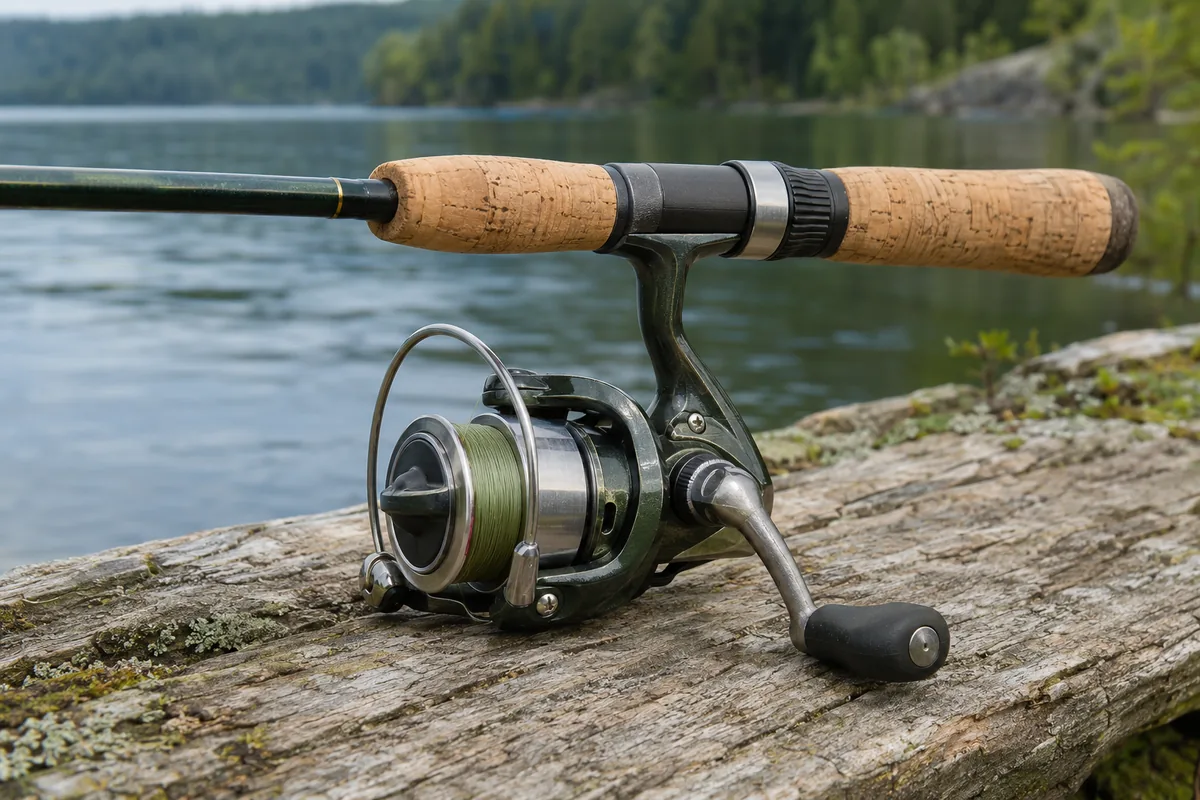
Drag is the reel’s adjustable resistance to line being pulled from the spool. It helps an outfit release line under load rather than behaving like a locked connection. The right setting depends on the complete outfit and the fishing method; the reel’s advertised maximum drag is not a beginner target.
Learn the control before fishing. Adjusting an unfamiliar knob for the first time while a fish is pulling is an avoidable complication.
Start with the exact reel manual
Identify the model and find its instructions through the manufacturer’s official support site. Confirm which control adjusts drag and the specified tightening and loosening directions. Many spinning reels have a front knob, but designs differ and other controls may be nearby.
Check the manual’s procedure, any cautions, and whether it provides a starting setting for your line and method. A generic numerical rule is not a substitute for model-specific instructions or the needs of the weakest relevant component.
The matching guide helps you check the rod, line, and casting load before dealing with drag.
Understand the parts of the system
Line strength, knot quality, leader, hook, rod, and the intended fish all influence how the outfit behaves. A damaged knot can fail before the line reaches its stated strength. A very strong main line does not make a small hook or light rod equally strong.
Drag is also different from the bail. Opening the bail releases line for casting; it is not the same as allowing controlled slip from a closed, correctly operating reel. Do not rely on the wrong control because both appear to let line move.
Prepare a safe checking arrangement
Remove the hook or lure before testing. Work in a clear area and keep line away from your face, bare fingers, other people, and pets. Never wrap line around a hand or test by yanking a sharply bent rod against an immovable object.
If the manufacturer specifies a scale-based method, use a suitable scale and a secure, hook-free connection. Arrange the rod, line path, and support exactly as instructed. Ask a qualified tackle shop or manufacturer to demonstrate if you cannot create the setup safely.
Do not improvise a test of the rod’s breaking limit. The purpose is to verify controlled line release at an appropriate setting, not discover what fails first.
Adjust gradually and observe
Following the manual, begin with manageable resistance and make small adjustments. Check how the line starts moving and whether release remains smooth. Keep fingers clear of a rotating spool and never try to arrest it by grabbing moving line.
| Observation | What to do next |
|---|---|
| Controlled, smooth release | Compare the setting with the manual and intended method |
| Sudden sticking or jerking | Stop and investigate before fishing |
| Knob is tightened but line behaves oddly | Check setup and seek model-specific troubleshooting |
| A recent line change | Recheck compatibility and drag rather than copying the old setting |
Counted clicks are not a universal measure of resistance. The same number can behave differently across models and setups. Likewise, setting by how hard line feels against a bare hand is imprecise and can be unsafe.
Recognize when adjustment is not the fix
If drag is rough, line is slipping around the spool arbor, or something makes an unusual noise, more knob pressure may not solve the underlying problem. Shimano’s support guidance distinguishes drag problems from other reel issues. Consult the exact manual or service provider instead of opening the reel and applying oil indiscriminately.
After a change, recheck before fishing. Use the line-twist troubleshooting guide for visible spool problems and the gear-care guide for routine external care. A smooth, understood drag is part of a functioning outfit, not a guarantee against every broken line.
Sources and further reading
- Shimano North America: FAQ — drag checking, smoothness problems, and other reel diagnostics; use the instructions for your model.
- Shimano: Reel Maintenance — checking operation before fishing and seeking help for complex maintenance.