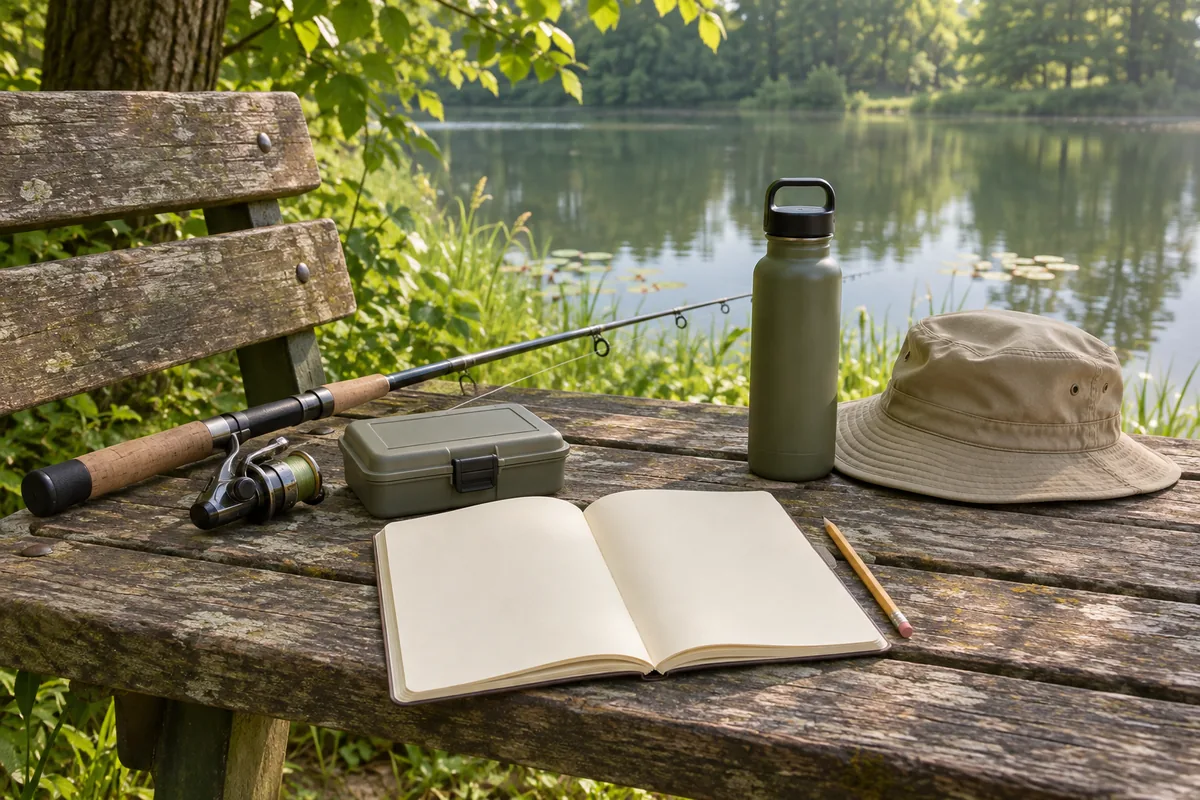
An outfit works as a system. A good rod can still feel awkward with an oversized reel, and line that fits on a spool can still be wrong for the rod or presentation. Matching is less about finding a magic combination of numbers and more about checking that every component supports the same job.
Use this guide for a conventional freshwater spinning or casting outfit. Fly fishing, heavy catfish equipment, and other specialized methods need their own matching process.
1. Describe the fishing method
Write a one-sentence plan, such as “small bait under a float from an open pond bank.” Add your likely target species and whether you expect rocks, brush, or thick vegetation. That description helps you judge whether a lightweight general outfit is appropriate.
Check access and fishing requirements with the agency responsible for the exact water. A technically compatible rig can still be inappropriate for a location with special bait or tackle rules.
2. Match the physical rod and reel type
A spinning reel belongs beneath a suitable spinning rod. A baitcaster belongs above a suitable casting rod. Do not select components solely because the reel foot fits into the seat.
Attach the reel securely according to the rod’s instructions. Hold the outfit in your normal fishing position and operate the controls. Can you reach the bail or spool comfortably? Does the handle suit your preferred retrieve hand? A setup that is tiring to hold is unlikely to encourage practice.
3. Check the complete casting load
Read the rod’s lure-weight range. Count everything being cast, including any sinker, hook, bait, float, or attached hardware. A lure’s label does not describe an entire rig after you have added extra components.
For example, a rod labeled 1/8–3/8 ounce is not an invitation to cast a 3/8-ounce sinker plus a substantial bait. The combined load matters. Those figures are an illustration of how to read the rating, not a recommended range for all beginners.
If the rig is much lighter than the outfit was built for, casting may be frustrating. If it exceeds the rated load, choose a suitable outfit rather than trying to compensate with a gentler swing.
4. Cross-check line and capacity
Read the rod’s line range and the reel’s capacity information. Then look at the exact line’s material, strength, and diameter. A reel size number by itself is not enough: makers use different numbering systems, and capacity figures usually refer to a specified line.
| Label or feature | What to confirm |
|---|---|
| Rod line range | Your selected line fits the maker’s intended use |
| Rod lure range | The complete casting load is appropriate |
| Reel capacity | The spool suits the material and diameter you plan to use |
| Reel instructions | Any requirements for backing, braid, or spool preparation |
| Drag control | It operates smoothly and you understand its adjustment |
Do not assume braid’s thin diameter makes it interchangeable with mono of the same diameter. Its stated strength and low stretch can change how the outfit behaves. Read the line guide before changing materials.
5. Treat drag as a working control
Drag lets the reel release line under load. It is not simply a setting to tighten until the spool stops moving. Follow your reel’s instructions and get a demonstration if you are uncertain how to set or test it safely.
Do not use a hooked lure, a sharp bend in the rod, or a bare hand wrapped in line as a testing arrangement. Never attempt to determine the rod’s limit by pulling against a fixed object. Safe operation matters more than chasing a precise drag number from an unrelated setup.
6. Confirm the outfit with a simple practice session
Before fishing, inspect the guides and line path, spool according to the manual, tie a hookless practice plug within the rating, and make short casts in a clear, permitted space. Stop for loose line loops or abnormal noises instead of forcing the equipment.
A pre-matched combo can reduce the number of purchase decisions, but still check its labels and included line. If you already have equipment, identify it before buying replacements; one compatible component may be all you need.
Finish with the tackle-box checklist and first rod guide. Compatibility is a necessary starting point, not a promise of casting distance or fishing success.
Sources and further reading
- Oregon Department of Fish & Wildlife: Gearing Up for Fishing — examples showing that outfits vary with species and method, explicitly presented as starting points.
- Illinois DNR / iFish Illinois: Knots — the importance of a balanced outfit and a sound terminal connection.