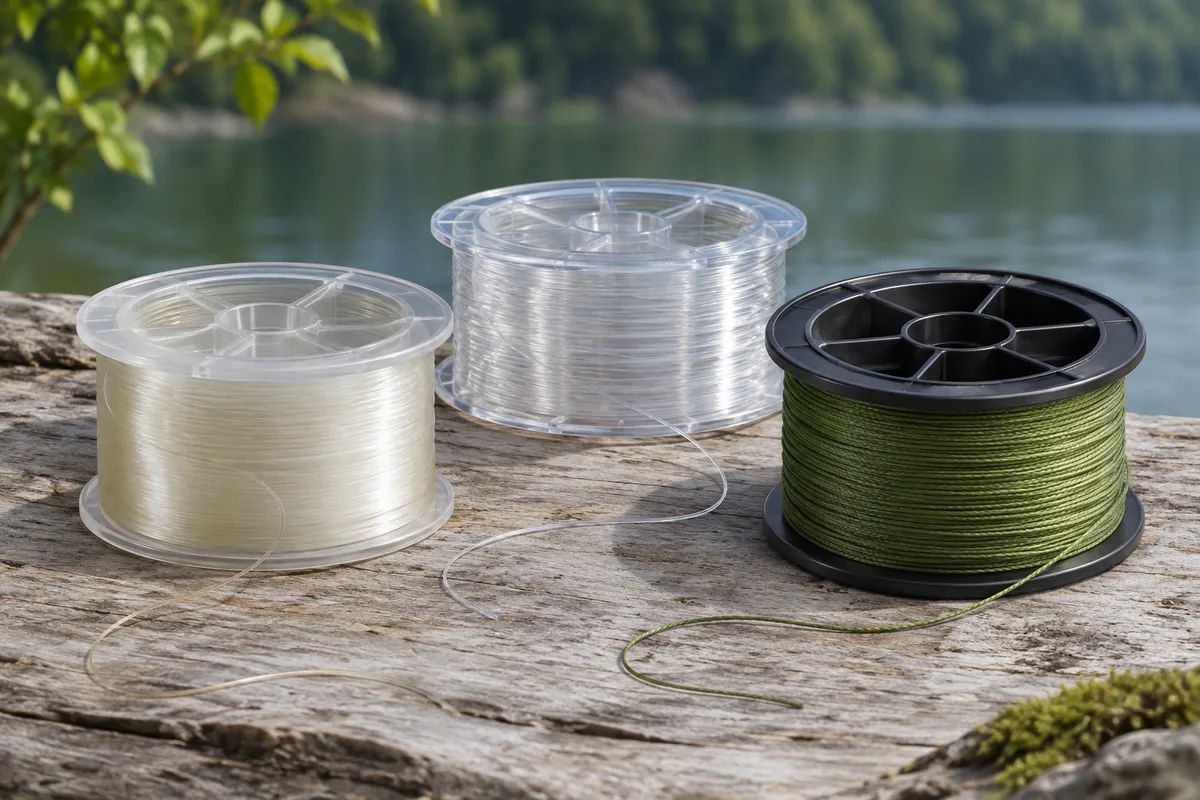
Fishing line is both a connection and a system of tradeoffs. Strength, diameter, handling, knots, and the way you fish all matter. A package claiming “stronger” or “less visible” does not tell you whether the line will work well on your particular outfit.
For a first freshwater spinning setup, nylon monofilament is a practical category to investigate. It can keep the number of new skills manageable. Fluorocarbon and braid are useful alternatives when you have a reason for their characteristics, rather than automatic improvements.
First, separate the labels
“Mono” in everyday fishing conversation usually means nylon monofilament. Fluorocarbon is also a single-strand material, but it is normally sold under its own name. Braided line is made from multiple fibers woven together. Check the actual product description; a coated or blended line may not behave exactly like a broad category summary.
Pound test is a stated breaking-strength rating, not the size of fish you are allowed to catch. Diameter affects how much line fits a spool and how it behaves through guides. Two lines with the same pound-test label need not have the same diameter.
The useful differences
| Line | Why someone might choose it | What to investigate first |
|---|---|---|
| Nylon monofilament | A straightforward main line for learning a simple setup | Spool memory, diameter, rod rating, and a suitable knot |
| Fluorocarbon | A leader or main line for a particular presentation | Handling on a small reel and the maker’s knot guidance |
| Braid | Thin diameter for its stated strength and very low stretch | Spool compatibility, knots, leader decisions, and safe handling |
Fluorocarbon is not invisible, and braid is not immune to damage. Water clarity, light, line diameter, cover, and the fish all complicate simple claims. Do not buy a material expecting it to compensate for a poor presentation or a damaged knot.
A manageable first decision
Suppose your spinning rod is labeled for a range that includes 6- or 8-pound line and you plan to fish small baits in relatively open water. Compare nylon mono products in that range with the reel’s capacity guidance. Those numbers are an example to help you read labels, not a universal freshwater prescription.
Before buying a large spool, find out how much your reel actually needs. Keep the package or a note of the material, diameter, and strength. That makes troubleshooting easier than trying to identify an unmarked line months later.
If your target fish or cover requires a substantially different outfit, change the whole plan. Installing very strong braid does not increase the rod’s safe casting load or make a light hook stronger.
Think through a leader before adding one
A leader is a separate section of line between the main line and the hook or lure. It can be useful, but it adds a connection that you must tie and inspect. A newcomer using a simple mono setup may not need that complication at all.
When a leader is justified, choose its material and length for the technique and actual conditions. Consult the line maker for a suitable connection knot, especially if the two materials have different diameters. Our basic knots guide focuses on terminal knots; it is not a complete braid-to-leader manual.
Spool and use it carefully
Follow the reel manual’s instructions for fill level and spool preparation. Overfilling can create handling problems; underfilling may reduce casting performance. Do not use a generic “fill to the edge” rule for every reel.
Inspect the section near the lure and any area that has rubbed against rocks or cover. Replace visibly damaged line and retie after cutting it back. A neat-looking spool cannot tell you the condition of the last few feet.
Never wrap fishing line around your hand to free a snag. Thin line, especially braid, can cut skin. Keep clipped pieces in a small waste container and take them home for appropriate disposal or a local line-recycling program.
Know the limits of the comparison
These are material categories, not verified rankings of brands, abrasion resistance, or breaking strength. Read the specifications of the exact line you are considering. Then check rod, reel, and line compatibility before spooling it. The aim is a predictable outfit whose knots and controls you understand.
Sources and further reading
- Shimano: Fluorocarbon or Mono, Which Leader Should I Use? — material and leader tradeoffs, rather than a universal product ranking.
- U.S. Fish & Wildlife Service: A Guide to Fishing for the First Time — a beginner freshwater checklist that includes monofilament.