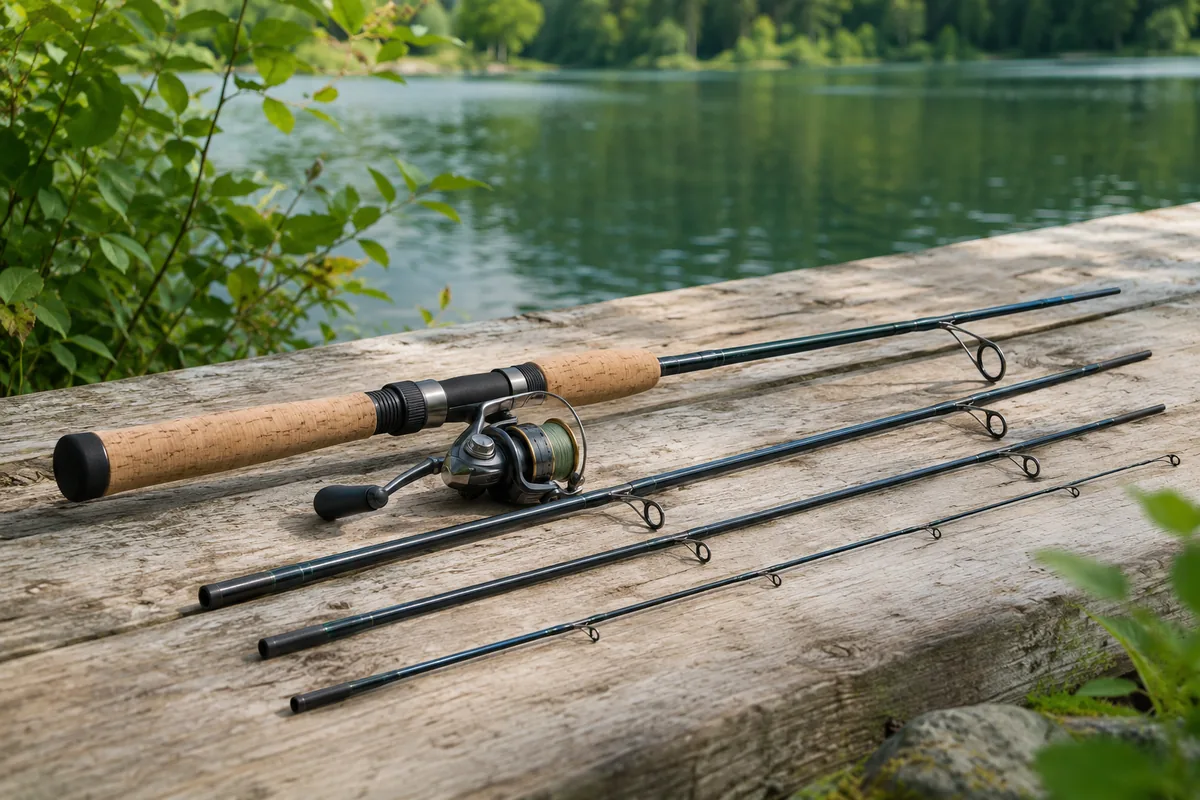
Your first rod should make a simple fishing trip easier. Before comparing materials or counting guides, decide where you can actually fish and what you expect to cast. A rod for small baits at an open neighborhood pond has a different job from one used to pull heavy lures through dense vegetation.
This is a selection guide, not a hands-on product review. The examples below are starting points for ordinary freshwater bank fishing; they do not cover every species or technique.
Start with the trip, not the product
Write down three things: your likely fishing spot, a likely target fish, and your first bait or lure. If the answers are “a public pond, bluegill, and a small worm under a float,” you can make a more useful purchase decision than if your goal is simply “a good rod.”
Ask a local tackle shop or the water manager whether that plan fits the location. A pond may have access restrictions or bait rules, and a fish visible from shore may not be a species you can legally target. Consult the current state agency rules for that water before buying specialized tackle.
Understand the four labels
Rod type comes first. Pair a spinning reel with a spinning rod. A casting rod is designed for a reel that sits above the handle; it is not an interchangeable substitute just because the reel foot can be made to fit.
Length affects both reach and handling. Think about overhead branches, your casting space, and the ride home. A rod that feels manageable in a clear store aisle may be awkward on a narrow wooded path. Compare a couple of lengths in person if possible; you do not need the longest rod on the rack.
Power describes how much force is needed to load the rod. Action describes where and how the rod bends under load. These are different properties. Shimano also notes that power labels are not universal between rod series, so treat “medium” as a category to investigate rather than a precise specification.
Read the actual line and lure ratings
A rod’s printed line and lure ranges are more useful than a broad “all-purpose” claim. Check the complete rig’s casting weight: a sinker, hook, bait, and float all contribute. Do not assume a light lure becomes suitable after adding a heavy weight.
As an illustrative starting point, someone considering modest pond fishing might compare spinning rods around six to seven feet long in light, medium-light, or medium power. That range is deliberately broad: tiny panfish presentations and heavier bass lures should not force the same choice. The ratings on the specific rod, the fishing spot, and your intended tackle decide which one fits.
| Your likely trip | What to check before buying |
|---|---|
| Small baits in open water | Whether the light end of the lure rating covers your rig |
| Mixed pond fishing | Whether one practical rig falls comfortably within both ratings |
| Brushy paths and cramped banks | Casting clearance and packed length |
| Heavy cover or large fish | Whether a general beginner setup is appropriate at all |
Check comfort and construction
With the intended reel attached, hold the rod as you would while fishing. Can you reach the reel controls without an uncomfortable stretch? Does the grip remain comfortable after a few minutes? A balanced, manageable outfit is preferable to a specification you dislike holding.
Look along the guides for obvious damage or misalignment. Check that the reel seat tightens securely and that a two-piece rod joins correctly following its instructions. Never test a rod by bending the tip sharply with your hand or pulling against a fixed object.
Choose one piece or multiple pieces around transport needs. A two-piece rod that travels safely inside your car may be more useful than a longer one-piece model that has to be squeezed against a door.
Make the purchase support the whole setup
Leave room for line, hooks, a way to remove hooks, and safe storage. A rod is only one part of the outfit. Borrowing equipment or trying a local education session can also clarify which handle and reel type you prefer before you spend money.
Next, compare spinning and baitcasting reels and use the rod, reel, and line matching checklist before buying separate components. A suitable rod helps you learn; it does not guarantee a catch or make an unsuitable fishing location safe.
Sources and further reading
- Shimano: Rod action and power explained — definitions and the limits of power labels.
- Missouri Department of Conservation: Fishing Gear — one state agency’s example of a modest beginner outfit; its permit details apply to Missouri, not nationwide.