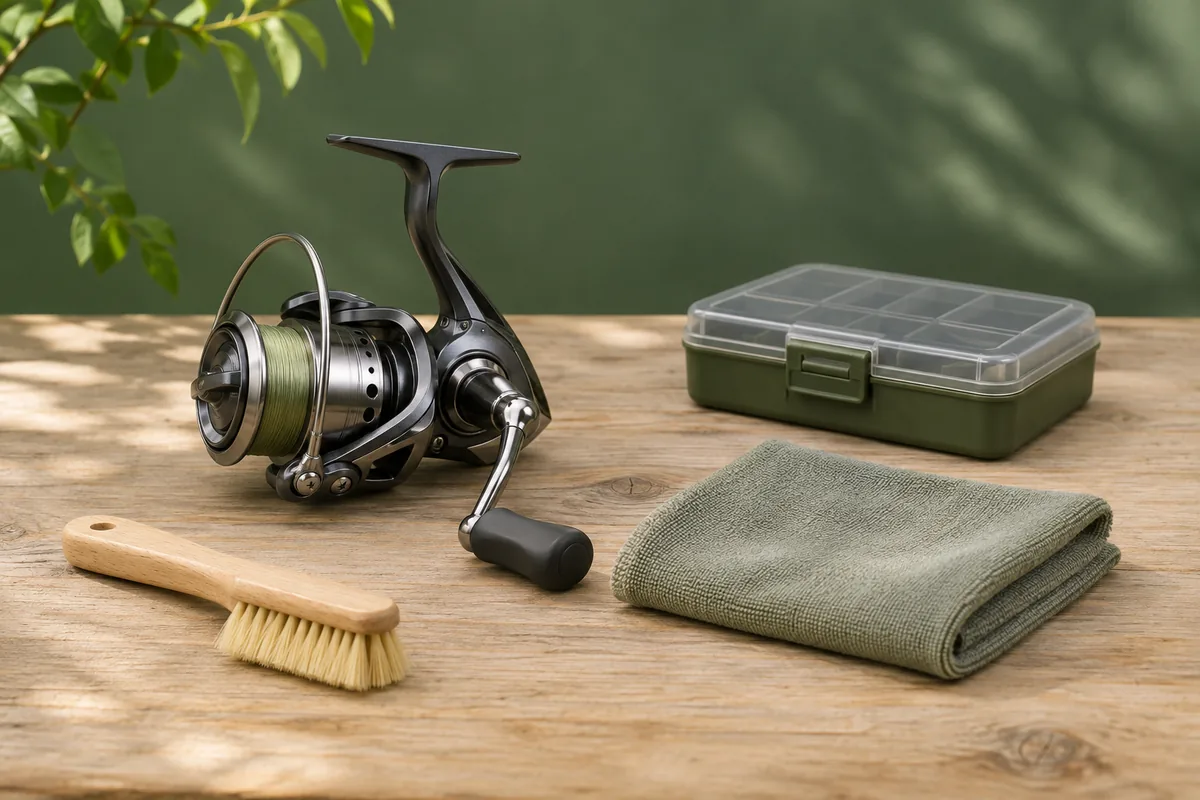
The best time to discover a wet tackle box, damaged line, or gritty reel is at home, before the next trip. A modest cleaning routine also makes it easier to understand what has changed when equipment starts behaving differently.
Everyday maintenance and invasive-species prevention have different purposes. Wiping a reel protects equipment; removing organisms from a wet net helps protect the next water you visit. Do both, using methods appropriate to the item and the local agency’s guidance.
Before leaving the water
Secure all hooks and separate anything damaged. Inspect boots, net mesh, buckets, and other wet equipment for attached mud, plants, or organisms. Remove visible material before you transport the gear, and follow the site’s disposal instructions.
Do not transfer live bait, fish, or water into a different waterbody. Check current bait transport and disposal rules with the state agency. A bait container is part of the cleaning plan, even on a trip without a boat.
Keep used tackle separate from clean spares. Dropping a wet hook into an otherwise dry compartment is an easy way to create a problem that remains hidden until your next outing.
Clean the rod gently
With hooks removed or safely secured, wipe the rod and handle using a soft cloth and an appropriate mild cleaning method permitted by the maker. Remove ordinary dirt without scraping the blank or forcing material into joints and fittings.
Inspect guides for obvious damage and look for cracks or rough edges that could harm line. Check the reel seat and, on a multi-piece rod, the joint area. If something is loose or damaged, resolve it before fishing again. Do not test suspected damage by bending the rod harder.
Allow the rod to dry before putting it into a closed sleeve or case. During transport, protect the tip from doors, heavy luggage, and other loads rather than relying on the case to resist crushing.
Clean the reel according to its manual
A soft exterior wipe is a sensible first step after an ordinary freshwater trip. Remove grit carefully. Do not assume every reel should be sprayed, soaked, or treated with the same lubricant.
Shimano’s general maintenance guidance cautions against submerging the reel and recommends professional help for more complex internal work. Use the manual for your exact model to determine approved rinsing and lubrication. Avoid directing high-pressure water at a reel, and do not spray household products into it as a substitute for the specified service method.
If the reel has been dunked, becomes rough, or makes a new noise, stop and consult the manufacturer or an appropriate service provider. Adding more oil is not a diagnosis. Photograph the model label and keep its manual somewhere you can find it.
Dry and sort the tackle box
Open wet compartments in a safe location away from children and pets. Let contents dry, then inspect hooks, swivels, weights, and tools. Dispose of damaged sharp items securely; do not throw loose hooks into a bag where they can injure someone later.
Check the last section of fishing line for abrasion or other visible damage. Replace damaged sections and retie with a knot suitable for the material. If the line’s age or condition is uncertain, consult the maker rather than relying on a universal replacement calendar.
| Item | Before storing |
|---|---|
| Rod | Dry, inspect guides, protect the tip |
| Reel | Clean exterior and follow the exact manual |
| Hooks and tools | Dry, inspect, and isolate damaged pieces |
| Line | Inspect exposed sections and contain offcuts |
| Net, boots, and buckets | Complete the local invasive-species procedure |
Store gear without creating the next problem
Choose a dry, protected place away from heavy loads and prolonged heat or sunlight. Support rods without forcing them into a permanent curve. Keep sharp tackle secured and retain labels so you can identify line and hook sizes later.
For invasive-species precautions, use current state guidance for the particular water and equipment. Drying times and decontamination methods can differ. Hot water or chemical treatment suitable for one item may damage another, so do not apply a boat-cleaning instruction indiscriminately to reels, clothing, or glued components.
Finish by noting what needs replacement in your tackle box. A brief equipment check before the next bank-fishing trip completes the routine. Maintenance reduces avoidable problems; it does not make worn or damaged equipment safe to use.
Sources and further reading
- Shimano: Reel Maintenance — general exterior care and the limits of do-it-yourself internal servicing; model instructions take priority.
- U.S. Fish & Wildlife Service: Clean, Drain, Dry — preventing transfer of aquatic organisms.