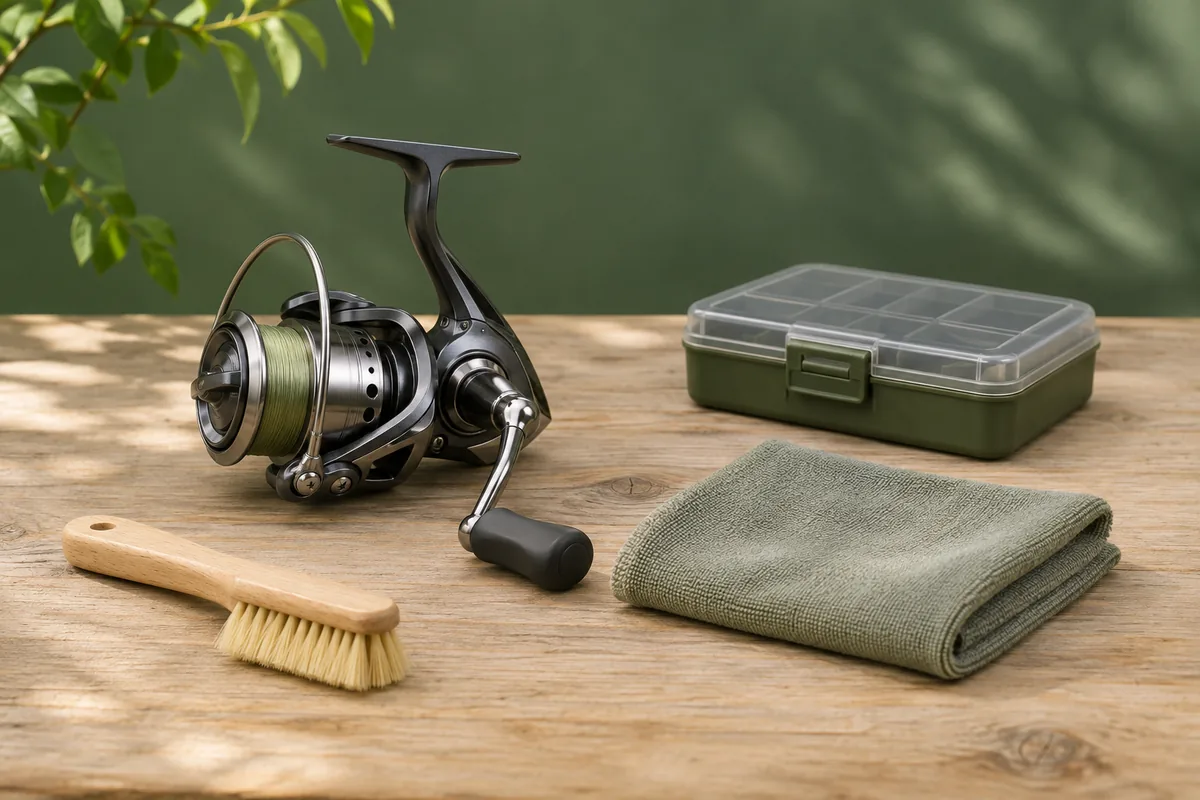
Aquatic organisms can travel with fishing equipment even when no boat is involved. Mud in boot treads, water in a bucket, and vegetation caught in a net can move material from one fishing spot to another. A bank angler’s cleaning routine should account for every item that contacted the water.
“Clean, drain, dry” is a useful organizing principle. The exact requirements can vary by state, waterbody, equipment, and the organisms present, so use local agency instructions before the next trip.
Make a before-leaving checklist
Keep a small waste bag or closing container and an appropriate brush with your gear. When the fishing session ends, secure hooks first, then inspect equipment in a safe designated area.
Check boots, net mesh, buckets, float rigs, and other wet items. Look in seams, handles, and small spaces as well as the obvious outer surfaces. Remove visible mud, plants, and organisms according to site instructions rather than carrying them home unnoticed.
The National Park Service explains that harmful aquatic organisms can hide on recreational equipment. Pennsylvania’s guidance explicitly includes fishing gear in the inspection process. You do not need to recognize every organism before taking precautions.
Clean visible material
Remove debris before transporting equipment to another water. Use the facility’s cleaning station when available and follow its instructions. Manage removed material and rinse water so they do not become a new route into another waterbody or drain.
Do not apply one cleaning method to every item. A brush suitable for boot soles may damage net mesh or a rod finish. High-pressure or hot-water instructions intended for watercraft should not be applied indiscriminately to reels, fabric, adhesives, or sensitive components.
Drain retained water
Empty retained water from appropriate equipment before leaving the access area, following local rules and designated drainage instructions. Think beyond a bucket: a net handle, boot, or other hollow item may retain water.
Do not move lake or river water to another destination for convenience. Bait containers require particular attention; check transport and holding rules before the trip rather than discovering a conflict while packing up.
| Item | What to inspect or plan |
|---|---|
| Boots and footwear | Treads, seams, trapped mud, and retained water |
| Landing net | Mesh, frame joints, and any hollow sections |
| Bucket or bait container | Water, contents, and permitted disposal method |
| Tackle and line | Attached vegetation and contained offcuts |
| Carry bag | Wet compartments and contact with contaminated items |
Dry before reuse, and check decontamination needs
Open and dry equipment appropriately. A dry-looking outer surface does not prove the inside is dry. Follow the local agency’s required waiting period or decontamination procedure before using the gear in another waterbody.
There is no single drying interval that this article can safely prescribe for every place and item. A quick towel wipe may be inadequate where a particular organism or mandatory treatment is involved. Ask the agency if the equipment will be reused sooner than the required process permits.
Do not invent a chemical mixture or heat treatment. Use approved local guidance, product labels, and equipment-manufacturer limitations together. When they conflict, ask for a compatible method rather than risking damaged equipment or contaminated runoff.
Dispose of bait and waste deliberately
Never dump unwanted bait or packing material into the water. Follow agency instructions for disposal and do not move live organisms to another waterbody. Contain clipped line, soft-plastic fragments, and broken tackle so wildlife cannot become tangled or hooked.
If you notice a suspected invasive organism, record the location and use the agency’s reporting instructions. Do not transport a specimen on your own initiative.
Finally, separate this ecological routine from the rod-and-reel maintenance routine. Both matter, but they protect different things. Include cleaning time in bank-trip planning so the process happens before you hurry to the next destination.
Sources and further reading
- National Park Service: I Didn’t Know That! — Clean, Drain, Dry — aquatic hitchhikers and the clean, drain, dry approach.
- Pennsylvania Fish and Boat Commission: Clean Your Gear — fishing-equipment inspection and responsible bait disposal; use the current rules for your location.