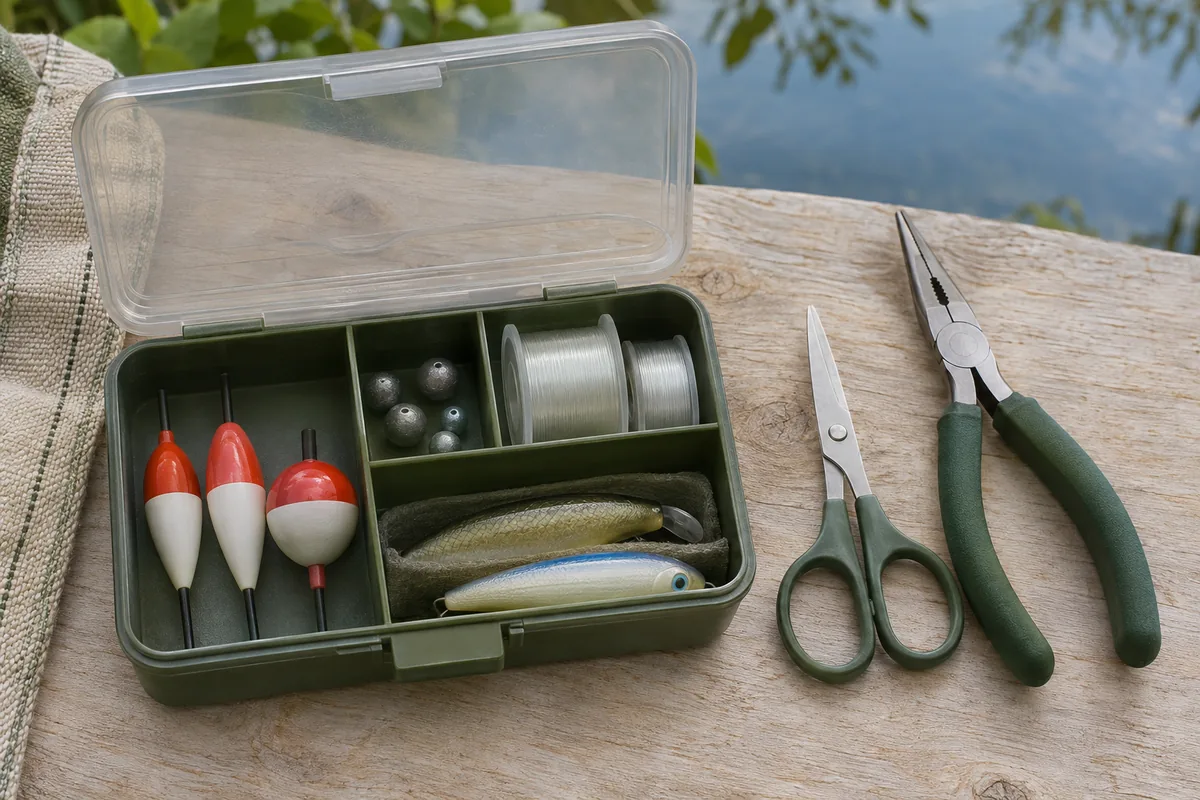
A fixed bobber rig suspends a bait below a float attached to the line. It is a useful way to learn depth control and observe a bite at suitable freshwater spots. The aim is a simple, understandable presentation, not the largest float or the most equipment.
This guide covers a basic fixed float with a single bait hook, where permitted. Deep-water slip floats, current-specific rigs, and specialized live-bait methods need different instructions.
Check the water and outfit
Confirm that the water allows your planned bait and hook arrangement. Choose a stable, legal fishing position with enough casting clearance. Inspect the rod, line, and knot before attaching sharp tackle.
The complete rig must fit the rod’s casting range. Include the float, any weights, hook, and bait when assessing the load. A large float plus heavy sinkers can overwhelm an outfit intended for light presentations.
Gather a small set of components
- A fixed float with instructions you understand.
- One bait hook appropriate to the intended bait and fish.
- Suitable line already spooled on a matched outfit.
- A small weight only if the presentation needs it.
- A safe line cutter and accessible hook-removal tool.
Choose a float that can support the rig while still showing movement. An oversized float may be difficult for a small fish to move clearly. A float overloaded with weight may sink even without a bite. Use hook-size guidance to compare actual hook shape and bait fit.
Assemble the rig
- Tie the hook using a knot suitable for the line and inspect it with the hook point safely controlled. The basic knots guide covers two terminal connections.
- Attach the fixed float above the hook following its mechanism’s instructions. Clip styles differ; confirm the line is held correctly rather than guessing from appearance.
- Set an initial hook-to-float distance suitable for the water you can fish safely. For a shallow, unobstructed area, a modest starting depth lets you observe the rig before making a longer cast.
- If needed, add a small suitable weight above the hook, using the weight’s instructions. Avoid crushing or damaging the line while attaching it. Consider non-lead alternatives and check local restrictions.
- Add a manageable portion of permitted bait. Keep the hook’s working gap clear enough for the selected method.
The float-to-hook distance is the intended presentation depth, not a measurement of the lake. In moving water or wind, the rig may hang at an angle rather than straight down.
Test nearby before casting farther
Lower the rig into an appropriate clear area close enough to observe without leaning over an unsafe edge. Does the float support the load? Is the bait hanging as intended? Is anything tangled around the float?
Then make a short, controlled cast. Stop the float from striking the rod-tip guide during retrieval, and do not swing a baited hook through a crowded area. If a long float-to-hook distance becomes difficult to cast, choose a different safe presentation rather than forcing it.
Adjust from what you can see
| What you observe | What to check |
|---|---|
| Float sinks immediately | Too much load, a tangle, or the float’s condition |
| Float lies sideways | The rig may be resting on bottom, or the float may be unsuitable |
| Bait repeatedly collects weeds | Reduce depth or choose a clearer permitted position |
| Bait is gone after small movements | Check bait fit and hook choice; avoid simply adding more bait |
Watch the rig actively. Wind, waves, and contact with plants can move a float, so movement alone does not identify a fish. How to respond also depends on hook style: do not apply a sharp J-hook motion indiscriminately to a circle-hook setup.
End the session by securing the hook and collecting line offcuts. Read beginner panfish fishing for a focused application and prepare a catch-and-release routine before the first fish arrives.
Sources and further reading
- New York DEC: Fishing Basics — basic hook, float, bait, and presentation sequence.
- U.S. Fish & Wildlife Service: A Guide to Fishing for the First Time — freshwater float-rig components and responsible preparation.