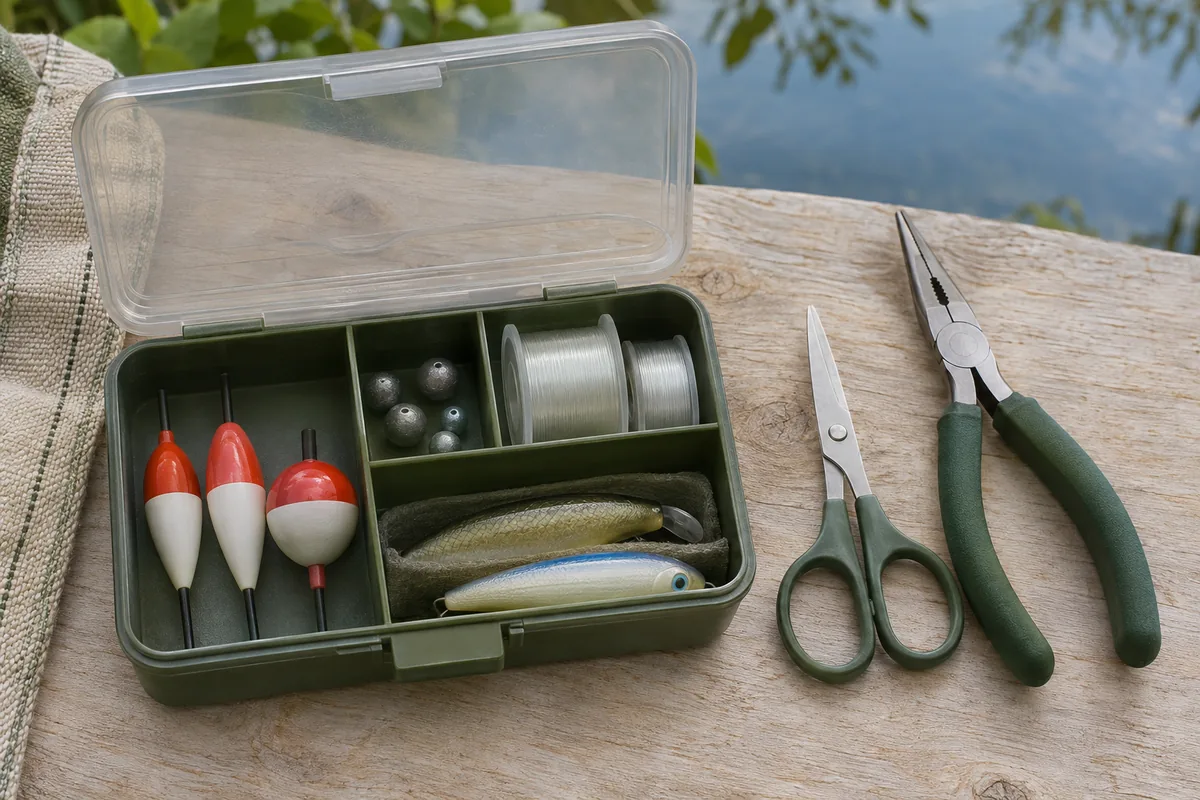
Your first bait decision is also a decision about how you want to fish. A piece of worm beneath a float lets you practice depth control and watching for a bite. A small artificial lure gives you repeated casting and retrieving practice. Neither category is the right answer for every fish or water.
Choose one method that fits the location, then learn how it behaves. This guide compares approaches rather than recommending or testing a particular product.
Check what the water permits first
Read the current state agency regulations and any special rules for the actual water. Some locations restrict natural bait, baitfish, scented products, hook types, or methods. A product described as “artificial” on its packaging may not meet a regulation’s definition of an artificial lure.
If the rule is unclear, ask the responsible agency before fishing. Do not use a general equipment guide as a substitute for that answer. Our license and rules checklist explains the separate checks involved.
Natural bait: a manageable way to watch a presentation
Natural bait includes organisms such as worms and other permitted animal or plant material. A small portion of worm can be a practical starting point for suitable panfish water. Missouri’s beginner guidance includes worms among its versatile bait options, but the fish present and local conditions still matter.
With a simple float rig, you can observe where the bait hangs and how the float responds. That makes it easier to work on one variable at a time. Start with a bait portion that fits the hook without filling the gap with a thick bundle.
Natural bait also brings responsibilities. Carry it in a secure, appropriate container, keep it in usable condition, and check transport and disposal rules. Never release unwanted bait or packing material into the water. “It is natural” does not mean it belongs in that ecosystem.
Artificial lures: practice through movement
An artificial lure may resemble prey or create movement that attracts a fish’s attention. A small spinner or jig can provide a focused way to learn casting direction, retrieve speed, and what the lure feels like in the water.
Match the complete casting weight to the rod. Before fishing a lure near cover, learn its normal action in a clear area where you can retrieve it safely. If it immediately drags bottom or collects vegetation, changing your presentation may be more useful than choosing another color.
Artificial lures can have exposed or multiple hooks. Choose a simple design you can handle confidently, keep it secured while moving, and check the area behind you before every cast. A compact lure is not automatically a safe or easy beginner lure.
Compare the whole session
| Your priority | A useful first option | The extra responsibility |
|---|---|---|
| Watch a bite indicator and learn bait depth | Permitted natural bait under a float | Monitor the rig actively and manage bait responsibly |
| Practice repeated casts and retrieves | A suitable small lure | Learn its action, depth, and hook hazards |
| Avoid handling live organisms | A permitted artificial or synthetic option | Check how regulations classify that product |
| Keep the trip simple | One method and a few replacements | Resist switching without a reason |
Synthetic doughs and scented manufactured baits occupy another practical category. Follow their instructions, local definitions, and disposal guidance instead of assuming they behave like either a worm or a hard lure.
Make one deliberate trial
For a first session, write down what you are trying to learn. If you choose bait, learn the simple bobber rig and watch it rather than leaving a line unattended. If you choose a lure, practice a consistent retrieve and note where it travels.
Do not judge an entire category by one quiet trip. Record the location, presentation, and what you observed. A useful next step is a reasoned adjustment, not a larger assortment. Both methods benefit from appropriate hook selection, sound knots, and careful fish handling.
Sources and further reading
- Missouri Department of Conservation: Bait and Lures — bait categories, artificial-lure examples, and responsible live-bait use.
- New York DEC: Fishing Basics — simple bait fishing and beginner presentation skills; consult current local regulations separately.